
A Professional Learning Plan for August to June

It’s summer! If you’re like us, you’re recharging and thinking about what’s ahead. For many school leaders, this includes planning summer professional learning (PL)—also known as professional development—to build momentum for the school year.
We’ve found that planning summer PL is a critical opportunity to build the foundation for coherent, focused, and effective adult learning throughout the school year. High-performing schools we’ve studied across the country narrow in on a small set of teacher learning goals, and they design a year-long professional learning plan with multiple opportunities for teachers to practice teaching strategies until they achieve mastery. These opportunities include summer PL, teacher professional development days, collaborative planning time, coaching, and more.
Where to Start? Narrow Your Focus to Three Cornerstone Themes
Many schools try to tackle too many PL objectives throughout the year. However, teachers need up to 50 hours of instruction, practice, and coaching before a strategy is mastered, so a sustained, narrow focus creates space for teachers to gain mastery. We suggest you focus on three cornerstone themes: instructional content, adult culture, and student culture.
You can use your student and teacher-level data to choose one or two key learning priorities within each theme. For instructional content, The Instructional Practice Coaching Tool (from Achieve the Core) provides examples of what Common Core- aligned instruction looks like across all grades and subjects, and helps identify areas of instructional strength and growth. For culture-related themes, student and teacher survey data is a critical resource.Maintain focus on your selected priorities until the data indicates mastery is achieved and it is time to move on to new priorities.
One of our partner schools chose the following three learning priorities as the foundation for their PL plan:
- Instructional Content: Data-Driven Instruction
- Student Culture: Responsive Classrooms and Effective Procedures
- Adult Culture: Difficult Conversations
Below we’ve provided some resources they used to think about what success looks like in each of these areas.
Queens Metropolitan High School puts Data-Driven Instruction into action with common, standards-based assessments and student data to adjust instruction and support.
Ridge Road Middle School in Charlotte, NC, transformed its student and adult culture through strong school-wide value, systems and routines they called “The Raven Way.”
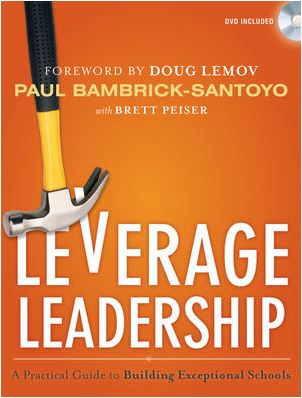
Leverage Leadership by Paul Bambrick-Santoyo includes a chapter on adult culture; chapters on student culture and professional development; and a CD of videos, presentations, and other practical resources.
Create a Professional Learning Calendar with Opportunities to Reinforce and Re-teach
Fifty hours is a lot of time—how can you find it in your packed school calendar? Begin by making sure you take advantage of every PL opportunity throughout the year. This includes: summer PL; any school-wide PL before, after, or during the school day; team meetings; and any district-led PL.
In our experience with school districts, we’ve seen how critical it is to coherently sequence your learning priorities across these PL opportunities and plan feedback loops that reinforce skills. This also includes timing training around key instructional and decision-making milestones such as data and assessment cycles and instructional leadership team meetings.
For example, if you address data-driven instruction during school-wide PD, you can use team meetings to apply and practice that strategy in different grades and subjects. You can further reinforce these skills through individual observation and coaching conversations by asking questions such as: Did teachers target instruction in groups in the ways that they planned? Based on exit ticket data, was their instruction effective? What will teachers do differently in the future?
Shining Example: Match Community Day School
Match Community Day School in Boston provides a detailed example of a rigorous, comprehensive professional learning plan that integrates whole-group professional development, team meetings, and individual observation and coaching cycles. Match aligns these PL opportunities with its data cycles so that teachers are completely prepared to provide data-driven instruction.
 Explore School Designer: A Design Planning Tool
School Designer is a tool to support districts implementing strategic school designs.
- Navigate the key decisions needed at each stage in the design process
- Explore a multimedia library of strategic school design proof points
- Discover additional tools and resources to develop strategic designs
ERS offers a free, modified version of School Designer to anyone with an ERS account.