
Funding Academic Supports in High Schools
Updated August 2024. Original guide launched July 2021.
Due to pandemic-related learning loss and disruption, an increasing number of high school students now need academic supports, accelerated learning, and interventions to get back on track. Course failure rates have increased dramatically, and many students are feeling disconnected from school, adults, and classmates.
District leaders need to help high school students reconnect to school in ways that reaffirm their interests and identities.
Our downloadable guide explains how high school leaders can effectively design academic supports and strategically organize resources with long-term sustainability in mind.
What Are Academic Supports?
Academic supports are educational services, such as additional instruction time or targeted attention, that schools must provide students to address gaps in the foundational skills they need to access Tier 1 instruction.
Examples of Academic Supports Include:
- High-dosage tutoring
- Strategically scheduled flex blocks
- Double-dose courses
- Acceleration academies
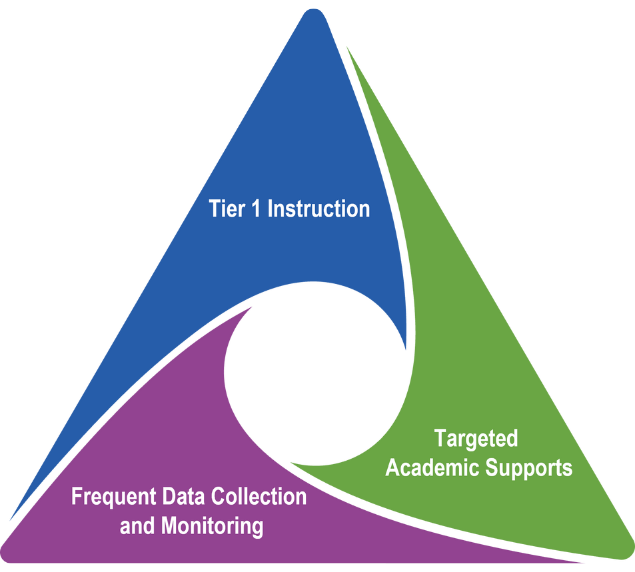
Download Our Guide on Targeted Academic Supports to:
- Better understand academic supports and their research-backed elements.
- Learn how to strategically schedule and staff your high school to best employ targeted academic supports.
- Explore real-world schedule examples that enable successful credit recovery.
- Learn how to invest in targeted academic supports—and how to avoid common investment pitfalls.
- Discover how to continuously improve your targeted supports strategy so that it’s effective and sustainable in the long term.
Additional Resources and Real-World Examples of Academic Supports

Denver Public Schools and Anne Arundel County Public Schools provide powerful examples of how to implement targeted academic supports that not only address urgent crises but make significant strides in service of a long-standing goal: to create more effective and equitable high school environments, experiences, and outcomes. Learn more.

Organizing Resources to Support Inclusion Models for Students With Disabilities
The pandemic highlighted the importance of effectively serving students with disabilities—and exacerbated the inequities embedded in traditional models for doing so. District leaders must know which resources to use and how to target them strategically to implement inclusion models that serve all students effectively and equitably. Learn more.

5 Ways High Schools Need to Look Different to Get and Keep Students on Track to Graduate
In this op-ed for District Administration, ERS CEO Karen Hawley Miles recommends a combined set of actions for addressing areas of student need—and the specific changes in scheduling and staffing needed to drive equity and excellence in high school redesign. Learn more.