
The First Three Steps of Strategic School Design
ERS Updates Our School Design Framework
Genevieve Quist Green, November 17, 2016

Each school year offers a fresh start for teachers and students. And strategic school leaders know that October through December can be a fresh start for next year’s school design. But why now, when the ink is barely dry on student and teacher assignments for the current school year?
Strategic school design is the deliberate alignment of a school’s resources around a clear vision for meeting students’ needs – and it takes time. By starting that planning in November and December, schools can enter the budgeting process in January to March with a clear vision of what success looks like for next year. With this extra time to plan, school leaders can refine their vision for change, identify students’ most urgent needs, and explore design options. The resulting school designs will be more innovative, coherent, and impactful than designs that simply react to the allocated budget.
A New School Design Framework
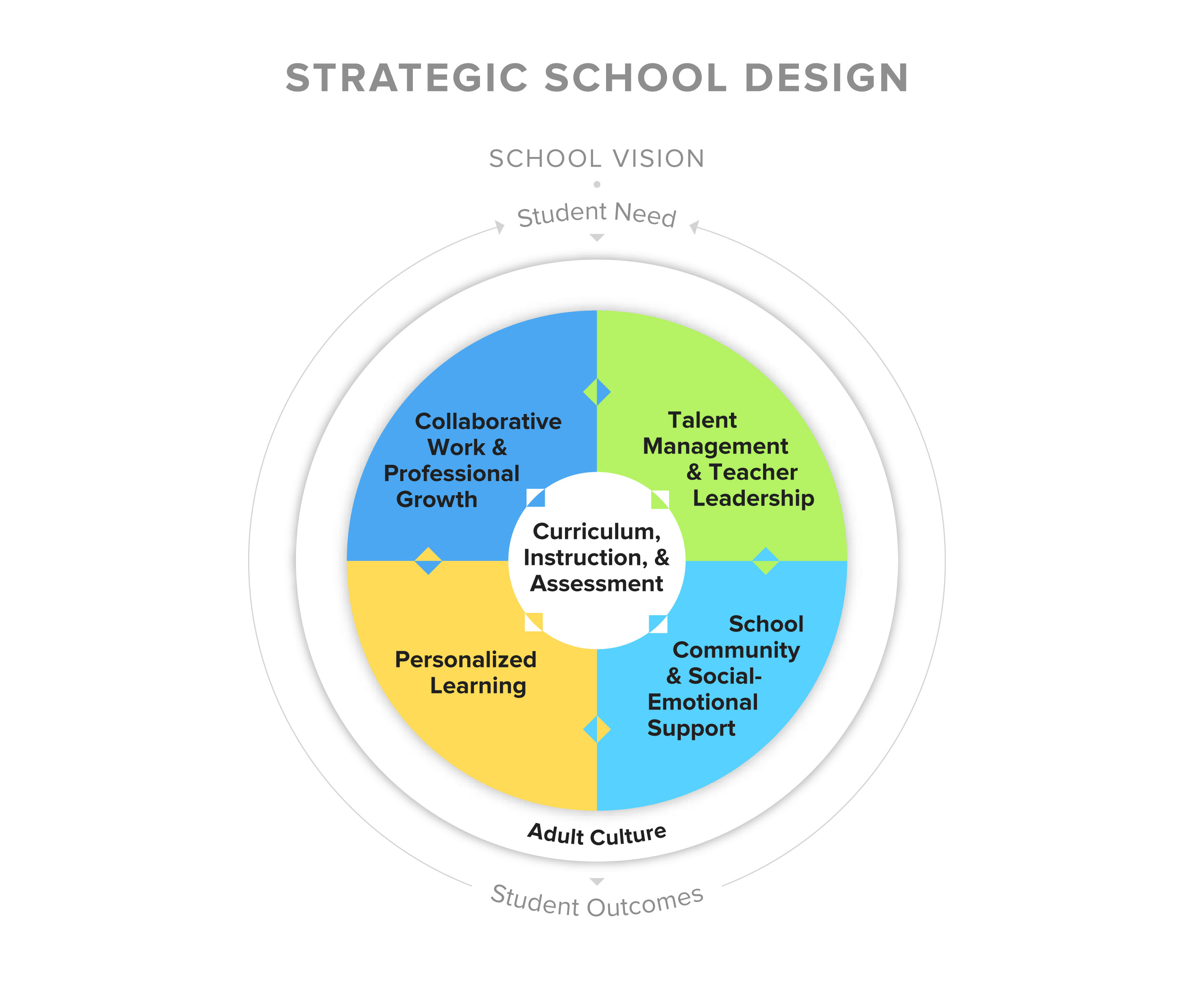
Strategic school designs should be based on each school’s student needs and vision for change. While every design is unique, they all share a similar foundation. Over 10 years of experience, ERS has learned that high-performing schools that serve high-needs students tend to focus their resources on six Design Essentials and follow a common decision-making process. We’ve recently updated our strategic school design framework to reflect this experience and recent findings about how schools can promote college- and career-readiness.
How to start?
Our tool School Designer will lead you through the journey towards strategic design, beginning with these three steps:
Clarify Your Vision: Strategic designs are driven by a clear vision for how your school can best meet student and teacher needs. This can include strengthening relationships between students and teachers or supporting vital dimensions of personalized learning such as quicker, more individualized academic interventions. School leadership teams often find it helpful to see their school from others’ perspectives. For example, shadowing a student allows teams to walk in a student’s shoes and understand firsthand how they experience school. This PBS video illustrates how shadowing a student impacted a school administrator’s outlook.
Assess the Need: You can refine your design vision by developing a deep, data-driven understanding of your school’s needs. This includes an analysis of academic performance and school climate trends across student sub-groups. You can also diagnose how the current use of people, time, money, and technology aligns with best practices and your most urgent student needs. We created and regularly use a tool called School Check to facilitate this diagnostic of resource use and start a conversation about potential areas for improvement.
Design the Change: This step is about determining how you can meet your school’s needs. For each Design Essential, we have identified “building blocks,” our term for strategies or options that effective schools use to organize resources to meet different types of student need. School Design in Action contains a growing set of case studies on these strategies, brought to life with videos, interactive presentations, and written narratives. For example, the Revere Freshman Academy video shows how ninth graders in Revere, MA get extra attention and support to set them up for success. We’ve also developed comprehensive Building Block Profiles to help you adapt a building block to your school’s context and identify what resources are required to implement that strategy.
We understand that without the right tools, this process can seem daunting. This is why we developed many tools and resources to support your strategic school design journey. Our School Designer tool will walk you through this process with step-by-step guidance, links to the resources we’ve cited here, and much more. ERS offers a free, modified version of School Designer to anyone with an ERS account.
 Explore School Designer
We hope your design work this fall and early winter gives you a refined sense of your school’s vision and needs, in addition to innovative design options to consider before you enter the budgeting cycle next year.